
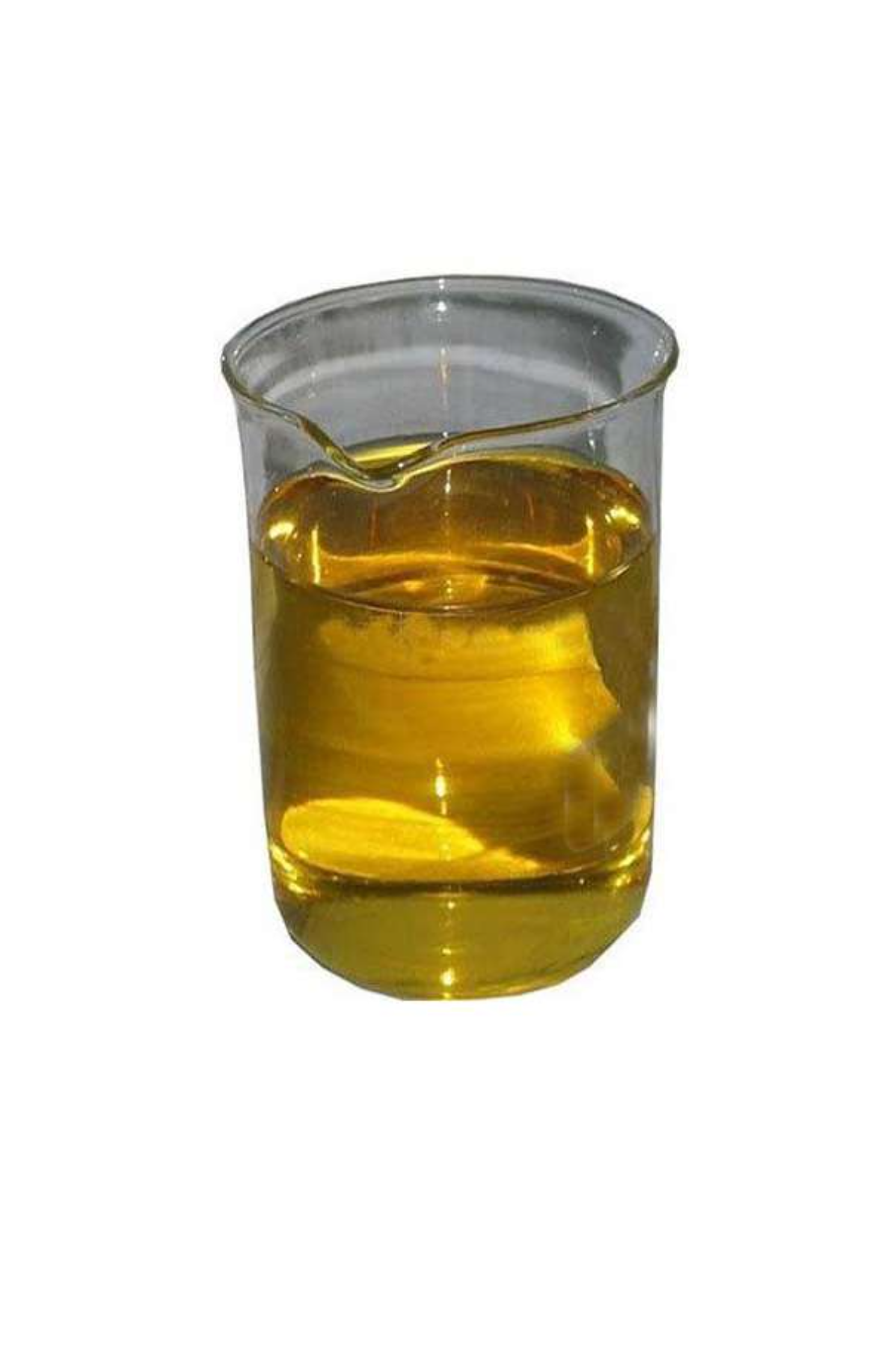
Buy Safrole Oil Cas 94-59-7
Safrole is a possibly-carcinogenic,[6] organic compound with the formula CH2O2C6H3CH2CH=CH2. It is a colorless oily liquid, although impure samples can appear yellow. A member of the phenylpropanoid family of natural products, it is found in sassafras plants, among others. Small amounts are found in a wide variety of plants, where it functions as a natural antifeedant.[7] Ocotea pretiosa,[8] which grows in Brazil, and Sassafras albidum,[7] which grows in eastern North America, are the main natural sources of safrole. It has a characteristic “sweet-shop” aroma.
Specification
The Safrole, with the CAS registry number 94-59-7, is also known as 4-Allyl-1,2-methylenedioxybenzene. It belongs to the product category of Aromatic Ethers. Its EINECS number is 202-345-4. This chemical’s molecular formula is C10H10O2 and molecular weight is 162.19. What’s more, its systematic name is 5-Allyl-1,3-benzodioxole. Its classification codes are: (1)Mutation data; (2)Natural Product; (3)Reproductive Effect; (4)Skin / Eye Irritant; (5)Tumor data. This chemical should be stored in a galvanized iron bucket or glass bottle which are placed in cool and dry places. Moreover, it should be protected from heat and fire. It is a colorless or slightly yellow oily liquid. It is typically extracted from the root-bark or the fruit of sassafras plants in the form of sassafras oil or synthesized from other related methylenedioxy compounds. It is the principal component of brown camphor oil, and is found in small amounts in a wide variety of plants, where it functions as a natural pesticide.
Physical properties of Safrole are: (1)ACD/LogP: 3.098; (2)# of Rule of 5 Violations: 0; (3)ACD/LogD (pH 5.5): 3.10; (4)ACD/LogD (pH 7.4): 3.10; (5)ACD/BCF (pH 5.5): 133.13; (6)ACD/BCF (pH 7.4): 133.13; (7)ACD/KOC (pH 5.5): 1153.87; (8)ACD/KOC (pH 7.4): 1153.87; (9)#H bond acceptors: 2; (10)#H bond donors: 0; (11)#Freely Rotating Bonds: 2; (12)Polar Surface Area: 18.46 Å2; (13)Index of Refraction: 1.551; (14)Molar Refractivity: 46.322 cm3; (15)Molar Volume: 145.029 cm3; (16)Polarizability: 18.363×10⁻²⁴cm3; (17)Surface Tension: 41.5 dyne/cm; (18)Density: 1.118 g/cm3; (19)Flash Point: 97.778 °C; (20)Enthalpy of Vaporization: 45.072 kJ/mol; (21)Boiling Point: 233.087 °C at 760 mmHg; (22)Vapour Pressure: 0.09 mmHg at 25°C.
Preparation of Safrole: this chemical can be prepared by 1-benzo[1,3]dioxol-5-yl-but-3-yn-2-ol at the temperature of 110 °C. This reaction will need reagents tris(1-pyrazolyl)borate]Ru(PPh3)(CH3CN)2·PF6, LiOTf and solvent toluene with the reaction time of 5 hours. The yield is about 70%. Buy Safrole Oil Cas 94-59-7
![Safrole can be prepared by 1-benzo[1,3]dioxol-5-yl-but-3-yn-2-ol at the temperature of 110 °C](https://www.lookchem.com/UserFilesUpload/Preparation%20of%20Safrole.jpeg)
Uses of Safrole: it can be used to produce 5-oxiranylmethyl-benzo[1,3]dioxole at the ambient temperature. It will need reagent CH3CO3H and solvent CHCl3 with the reaction time of 72 hours. The yield is about 80%. Buy Safrole Oil Cas 94-59-7
![Safrole can be used to produce 5-oxiranylmethyl-benzo[1,3]dioxole at the ambient temperature](https://www.lookchem.com/UserFilesUpload/Uses%20of%20Safrole.jpeg)
When you are using this chemical, please be cautious about it as the following:
This chemical is harmful if swallowed. It may cause cancer and has a possible risk of irreversible effects. It should be avoided exposure, and you need to obtain special instructions before use. In case of accident or if you feel unwell, you must seek medical advice immediately (show the label where possible).
You can still convert the following datas into molecular structure:
(1)SMILES: C=CCc1ccc2OCOc2c1
(2)Std. InChI: InChI=1S/C10H10O2/c1-2-3-8-4-5-9-10(6-8)12-7-11-9/h2,4-6H,1,3,7H2
(3)Std. InChIKey: ZMQAAUBTXCXRIC-UHFFFAOYSA-N
The toxicity data is as follows:
It is a precursor in the synthesis of the insecticide synergist piperonyl butoxide, the fragrance piperonal via isosafrole, and the empathogenic/entactogenic substance MDMA.

History
Safrole was obtained from a number of plants, but especially from the sassafras tree (Sassafras albidum), which is native to North America, and from Japanese star anise (Illicium anisatum, called shikimi in Japan).[9] In 1844, the French chemist Édouard Saint-Èvre (1817–1879)[10] determined safrole’s empirical formula.[11] In 1869, the French chemists Édouard Grimaux (1835–1900) and J. Ruotte investigated and named safrole.[12]: 928 They observed its reaction with bromine, suggesting the presence of an allyl group.[12]: 929 By 1884, the German chemist Theodor Poleck (1821–1906) suggested that safrole was a derivative of benzene, to which two oxygen atoms were joined as epoxides (cyclic ethers).[13]
In 1885, the Dutch chemist Johann Frederik Eijkman (1851–1915) investigated shikimol, the essential oil that is obtained from Japanese star anise, and he found that, upon oxidation, shikimol formed piperonylic acid,[14]: 39–40 whose basic structure had been determined in 1871 by the German chemist Wilhelm Rudolph Fittig (1835–1910) and his student, the American chemist Ira Remsen (1846–1927).[15] Thus, Eijkman inferred the correct basic structure for shikimol.[14]: 40–41 He also noted that shikimol and safrole had the same empirical formula and had other similar properties, and thus he suggested that they were probably identical.[14]: 41–42 In 1886, Poleck showed that upon oxidation, safrole also formed piperonylic acid, and thus shikimol and safrole were indeed identical.[16] It remained to be determined whether the molecule’s C3H5 group was a propenyl group (R−CH=CH−CH3) or an allyl group (R−CH2−CH=CH2). In 1888, the German chemist Julius Wilhelm Brühl (1850–1911) determined that the C3H5 group was an allyl group. Buy Safrole Oil Cas 94-59-7
Natural occurrence
Safrole is the principal component of brown camphor oil made from Ocotea pretiosa,[8] a plant growing in Brazil, and sassafras oil made from Sassafras albidum.
In the United States, commercially available culinary sassafras oil is usually devoid of safrole due to a rule passed by the US FDA in 1960.
CAS RN | 94-59-7 | SAFROLE


Reviews
There are no reviews yet.