
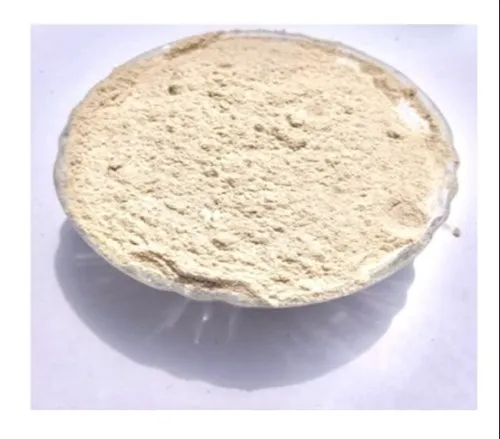
Buy Anthranilic acid Cas 118-92-3
Buy Anthranilic acid Cas 118-92-3
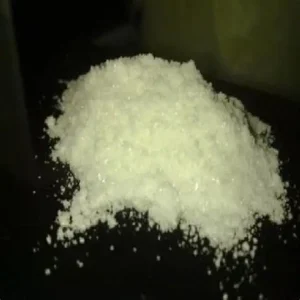
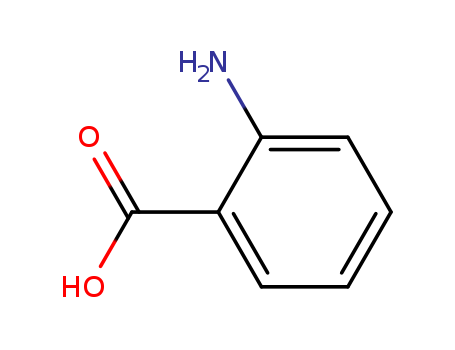
Anthranilic acid is an aromatic acid with the formula C6H4(NH2)(CO2H) and has a sweetish taste.[5][6][7] The molecule consists of a benzene ring, ortho-substituted with a carboxylic acid and an amine. As a result of containing both acidic and basic functional groups, the compound is amphoteric. Anthranilic acid is a white solid when pure, although commercial samples may appear yellow. The anion [C6H4(NH2)(CO2)]−, obtained by the deprotonation of anthranilic acid, is called anthranilate. Anthranilic acid was once thought to be a vitamin and was referred to as vitamin L1 in that context, but it is now known to be non-essential in human nutrition.[8]
Structure
Although not usually referred to as such, it is an amino acid. Solid anthranilic acid typically consists of both the amino-carboxylic acid and the zwitterionic ammonium carboxylate forms, and has a monoclinic crystal structure with space group P21.[9] It is triboluminescent.[10] Above 81 °C (178 °F; 354 K), it converts to an orthorhombic form with space group Pbca, which is not triboluminescent; a non-triboluminescent monoclinic phase with similar structure is also known.[10]
History and etymology
In 1840-1841, Carl Julius Fritzsche was able to extract and crystallize two acids from the products of reaction of indigo dye with caustic potash, which he called chrysanilic and anthranilic acids after their colors before purification (golden yellow and black respectively) and the plant anil (Indigofera suffruticosa).[11][12] The former was identified as ortho-carboxy anil of indoxyl-2-aldehyde only in 1910[13] while the latter was identified as salicylamide already in 1843 by Cahours.[14]
Production
Many routes to anthranilic acid have been described. Industrially it is produced from phthalic anhydride, beginning with amination:
- C6H4(CO)2O + NH3 + NaOH → C6H4(C(O)NH2)CO2Na + H2O
The resulting sodium salt of phthalamic acid is decarbonylated via a Hofmann rearrangement of the amide group, induced by hypochlorite:[15]
- C6H4(C(O)NH2)CO2Na + HOCl → C6H4NH2CO2H + NaCl + CO2
A related method involves treating phthalimide with sodium hypobromite in aqueous sodium hydroxide, followed by neutralization.[16] In the era when indigo dye was obtained from plants, it was degraded to give anthranilic acid.
Anthranilic acid was first obtained by base-induced degradation of indigo.[17]
Biosynthesis
Anthranilic acid is biosynthesized from chorismic acid by the action of anthranilate synthase. In organisms capable of tryptophan synthesis, anthranilate is a precursor to the amino acid tryptophan via the attachment of phosphoribosyl pyrophosphate to the amine group. After then, cyclization occurs to produce indole.
.svg)
Buy O-amino benzoic acid Cas 118-92-3
Buy O-amino benzoic acid Cas 118-92-3
Anthranilic acid is an aromatic acid with the formula C6H4(NH2)(CO2H) and has a sweetish taste.[5][6][7] The molecule consists of a benzene ring, ortho-substituted with a carboxylic acid and an amine. As a result of containing both acidic and basic functional groups, the compound is amphoteric. Anthranilic acid is a white solid when pure, although commercial samples may appear yellow. The anion [C6H4(NH2)(CO2)]−, obtained by the deprotonation of anthranilic acid, is called anthranilate. Anthranilic acid was once thought to be a vitamin and was referred to as vitamin L1 in that context, but it is now known to be non-essential in human nutrition. Buy O-amino benzoic acid Cas 118-92-3
Structure
Although not usually referred to as such, it is an amino acid. Solid anthranilic acid typically consists of both the amino-carboxylic acid and the zwitterionic ammonium carboxylate forms, and has a monoclinic crystal structure with space group P21.[9] It is triboluminescent.[10] Above 81 °C (178 °F; 354 K), it converts to an orthorhombic form with space group Pbca, which is not triboluminescent; a non-triboluminescent monoclinic phase with similar structure is also known.
O-Aminobenzoic Acid Uses, Dosage, Side Effects and more
| Attribute | Buy O-amino benzoic acid Cas 118-92-3 Details |
|---|---|
| Trade Name | O-Aminobenzoic Acid |
| Generic | Anthranilic acid |
| Anthranilic acid Other Names | 2-Aminobenzoesäure, 2-aminobenzoic acid, 2-carboxyaniline, o-Aminobenzoesäure, o-Aminobenzoic acid, o-carboxyaniline, Vitamin L1 |
| Type | Buy O-amino benzoic acid Cas 118-92-3 |
| Formula | C7H7NO2 |
| Weight | Average: 137.136 Monoisotopic: 137.047678473 |
| Groups | Experimental |
History and etymology
In 1840-1841, Carl Julius Fritzsche was able to extract and crystallize two acids from the products of reaction of indigo dye with caustic potash, which he called chrysanilic and anthranilic acids after their colors before purification (golden yellow and black respectively) and the plant anil (Indigofera suffruticosa).[11][12] The former was identified as ortho-carboxy anil of indoxyl-2-aldehyde only in 1910[13] while the latter was identified as salicylamide already in 1843 by Cahours.[14]
Production
Many routes to anthranilic acid have been described. Industrially it is produced from phthalic anhydride, beginning with amination:
- C6H4(CO)2O + NH3 + NaOH → C6H4(C(O)NH2)CO2Na + H2O
The resulting sodium salt of phthalamic acid is decarbonylated via a Hofmann rearrangement of the amide group, induced by hypochlorite:[15]
- C6H4(C(O)NH2)CO2Na + HOCl → C6H4NH2CO2H + NaCl + CO2
A related method involves treating phthalimide with sodium hypobromite in aqueous sodium hydroxide, followed by neutralization.[16] In the era when indigo dye was obtained from plants, it was degraded to give anthranilic acid.
Anthranilic acid was first obtained by base-induced degradation of indigo.[17]
Biosynthesis
Anthranilic acid is biosynthesized from chorismic acid by the action of anthranilate synthase. In organisms capable of tryptophan synthesis, anthranilate is a precursor to the amino acid tryptophan via the attachment of phosphoribosyl pyrophosphate to the amine group. After then, cyclization occurs to produce indole.
Uses
Industrially, anthranilic acid is an intermediate in the production of azo dyes and saccharin. It and its esters are used in preparing perfumes to mimic jasmine and orange, pharmaceuticals (loop diuretics, such as furosemide) and UV-absorber as well as corrosion inhibitors for metals and mold inhibitors in soy sauce.
Anthranilate-based insect repellents have been proposed as replacements for DEET.
Fenamic acid is a derivative of anthranilic acid,[18]: 235 which in turn is a nitrogen isostere of salicylic acid, which is the active metabolite of aspirin.[18]: 235 Several non-steroidal anti-inflammatory drugs, including mefenamic acid, tolfenamic acid, flufenamic acid, and meclofenamic acid are derived from fenamic acid or anthranilic acid and are called “anthranilic acid derivatives” or “fenamates”.
Anthranilic Acid Price And Quantity
- 50 Kilograms
Anthranilic Acid Product Specifications
- Anthranilic Acid
- 1 Years
- 99
- Acid Resistance
- 118-92-3
- Water
- 273.17
- Liquid
- Industrial Grade
- Liquid
- 12%
- Yes
- Acid Dye
- 338-342 F
Anthranilic Acid Trade Information
- 7 Days
Product Description
We are the leaders in this domain, engaged in manufacturing and exporting across several countries Anthranilic Acid. The provided acids are formulated using highly pure ingredients that are procured from the most credible vendors of the market. Our offered acids are available for the customers in different packaging options as per the wide requirements. These acids are known among the clients for their purity and originality. Anthranilic Acid is used for making dyes, intermediates, perfumery chemical, pigments, pharmaceutical intermediate. Buy O-amino benzoic acid Cas 118-92-3
Features:
- Free flowing dry powder
- 00.15% of free acidity as HCl
- Very less moisture content
Anthranilic Acid
CAS NO. : 118-92-3
- M.W. : 137
- Empirical Formula : C7H7O2N
- Synonyms :Ortho Amino Benzoic Acid, 2-Amino Benzoic Acid, 2-Carboxyaniline
- Form Supplied : Dry Powder
- Purity : Minimum 98%
- Melting Point : 144o – 146o C
- Appearance : Light Yellow Dry Powder
- Packing : 25 Kgs. H. D. P. E. Bags With Inside Polythene Liner.
- Uses : Mfg. of dyes, Intermediates, Pigments, Pharmaceutical Intermediate & Perfumery Chemical.
Certificate of Analysis
- Purity By Nitrite Value : 98.50%
- Moisture Content : 00.1% Maximum
- Ash Content : 00.25%
- Chloride AS Cl– : 00.15%
- Sulphate AS SO4-2 : 00.10%
- Insolubles In Soda Ash: 00.05%
- Free Acidity AS HCl : 00.15%
Exceptional Purity and Acid Resistance
Anthranilic Acid offers a purity level of 99%, ensuring minimal contamination and reliable performance in sensitive applications. Its inherent acid resistance makes it ideal for processes involving harsh chemical environments, as its physical properties remain stable. Supplied in liquid form, it is easily incorporated into various manufacturing and laboratory procedures. This high-grade chemical is widely trusted for consistent quality across Indias industrial sectors.
Trusted Supply Chain Across India
As a leading distributor, exporter, importer, manufacturer, supplier, and trader of Anthranilic Acid in India, our extensive supply chain ensures prompt availability and delivery. Whether for bulk manufacturing or specialized laboratory use, our logistics and storage systems preserve the products integrity throughout its one-year shelf life. Clients can rely on our expertise for secure and compliant sourcing across the region.
FAQs of Anthranilic Acid:
Q: How should Anthranilic Acid be handled and stored to ensure safety and stability?
A: Because Anthranilic Acid is classified as poisonous and has a shelf life of 1 year, it should be stored in tightly sealed containers in a cool, well-ventilated place, away from incompatible substances. Always use suitable protective equipment when handling to prevent exposure.
Q: What are the primary industrial uses of Anthranilic Acid supplied in liquid form?
A: Anthranilic Acid is primarily used in the manufacturing of dyes, perfumes, and pharmaceuticals. Its high purity and acid resistance make it a valuable component in processes that demand chemical stability and minimal contamination.
Q: When is the optimal time to order Anthranilic Acid for uninterrupted operations?
A: It is recommended to order Anthranilic Acid just before planned production cycles, accounting for its 1-year shelf life. Regular inventory checks will help ensure a continuous supply for manufacturing or laboratory needs.
Q: Where can businesses in India source high-quality Anthranilic Acid?
A: Anthranilic Acid with 99% purity and acid resistance can be sourced from reputable Indian distributors, exporters, manufacturers, suppliers, and traders with experience in handling and delivering hazardous chemicals safely.
Q: What is the typical process for importing or exporting Anthranilic Acid in India?
A: Importing or exporting Anthranilic Acid involves compliance with national and international chemical regulations, secure transportation, and documentation. Working with established importers or exporters ensures that all safety and regulatory guidelines are meticulously followed.
Q: How is Anthranilic Acid beneficial for acid-resistant applications?
A: Anthranilic Acids acid resistance allows it to maintain its properties and performance when exposed to harsh acidic environments, making it beneficial for chemical synthesis and industrial processes that require durability and reliability.
Q: What safety precautions should be taken during the usage of Anthranilic Acid?
A: Due to its poisonous nature, users must employ safety measures including gloves, protective clothing, and proper ventilation when using Anthranilic Acid. Immediate clean-up of spills and strict adherence to handling protocols is essential for user safety.
2-Aminobenzoic acid(118-92-3)
- Name:2-Aminobenzoic acid
- Synonyms:Vitamin L;2-Carboxyaniline;o-Anthranilic acid;BE2;Benzoic acid,2-amino-;1-Amino-2-carboxybenzene;Carboxyaniline;o-aminobenzoic acid;2-Carboxyphenylamine;Benzoic acid, 2-amino-;o-Carboxyaniline;NCI-C01730;2-aminobenzoate;2-aminobenzoic acid;alpha-Aminobenzoic acid;anthranilic acid;2-aminobenzoic acid;
- Molecular Formula:C7H7NO2
- Molecular Weight:137.138
- CAS Registry Number:118-92-3
- EINECS:204-287-5
- Melting Point:146 – 148 °C
- Water Solubility:5.7 g/L (25 °C) in water
2-Aminobenzoic acid(118-92-3)
- Name:2-Aminobenzoic acid
- Synonyms:Vitamin L;2-Carboxyaniline;o-Anthranilic acid;BE2;Benzoic acid,2-amino-;1-Amino-2-carboxybenzene;Carboxyaniline;o-aminobenzoic acid;2-Carboxyphenylamine;Benzoic acid, 2-amino-;o-Carboxyaniline;NCI-C01730;2-aminobenzoate;2-aminobenzoic acid;alpha-Aminobenzoic acid;anthranilic acid;2-aminobenzoic acid;
- Molecular Formula:C7H7NO2
- Molecular Weight:137.138
- CAS Registry Number:118-92-3
- EINECS:204-287-5
- Melting Point:146 – 148 °C
- Water Solubility:5.7 g/L (25 °C) in water
- Buy O-amino benzoic acid Cas 118-92-3,
- Buy O-amino benzoic acid Cas 118-92-3,
- Buy O-amino benzoic acid Cas 118-92-3,
- Buy O-amino benzoic acid Cas 118-92-3,
- Buy O-amino benzoic acid Cas 118-92-3,
- Buy O-amino benzoic acid Cas 118-92-3,
- Buy O-amino benzoic acid Cas 118-92-3,
- Buy O-amino benzoic acid Cas 118-92-3,
- Buy O-amino benzoic acid Cas 118-92-3,
- Buy O-amino benzoic acid Cas 118-92-3,
- Buy O-amino benzoic acid Cas 118-92-3,
- Buy O-amino benzoic acid Cas 118-92-3
New Germany Anthranilic Acid Market Research Report: Industry Dynamics, Key Players, and Regional Analysis
Consegic Business intelligence – Saturday, January 31, 2026.
Germany Anthranilic Acid Market Insights
This market research report provides a comprehensive analysis of the Anthranilic Acid Market, highlighting key trends, growth drivers, challenges, and emerging opportunities shaping the industry. The report examines market size, segmentation, competitive landscape, and regional performance to deliver a clear understanding of current market dynamics and future outlook. The insights presented in this study are intended to support informed strategic planning and decision-making for industry participants, investors, and other stakeholders.
Sample Report Including all Tables and Charts https://www.consegicbusinessintelligence.com/request-sample/3145
United States Vs Venezuela Impact Analysis
Tensions between the United States and Venezuela, combined with the ongoing global oil crisis, have significantly reshaped global energy dynamics. Political disputes, economic sanctions, and supply disruptions have contributed to heightened price volatility and increased market uncertainty. This report provides an in-depth analysis of these developments and examines their implications for the global economy, energy markets, and key industries. It also explores how businesses must adapt to evolving energy strategies and shifting market conditions.
What is Future Market Value of Anthranilic Acid Market?
Anthranilic Acid Market is Projected to Grow at CAGR of 1.6%, Reaching a Market Size of USD 147.91 Million by 2032
Get Sample Report (Including all Tables and Charts) @ https://www.consegicbusinessintelligence.com/request-sample/3145
The new report on the Germany Anthranilic Acid Market research report provides a comprehensive analysis of the current market landscape, imports, segmentation, key players, and opportunities, highlighting critical insights and emerging trends 2026-2033, that are poised to shape the industry’s future. This report offers valuable information for businesses, investors, and stakeholders looking to make informed decisions in a rapidly evolving market.
Germany Anthranilic Acid Market Snapshot
The market snapshot presents a concise overview of the Germany Anthranilic Acid Market, including key quantitative and qualitative metrics. It summarizes the current market size, forecast value, compound annual growth rate (CAGR), dominant regions, and high-growth segments. This section enables stakeholders to quickly assess market attractiveness and identify priority investment areas.
Value Chain Analysis
This section provides a detailed assessment of the Germany Anthranilic Acid Market value chain, covering raw material suppliers, manufacturers, distributors, and end users. It evaluates the role of each stakeholder and highlights areas of value creation and margin optimization. The analysis helps businesses identify strategic partnerships, improve operational efficiency, and understand cost structures across the industry.
Pricing Analysis
The pricing analysis examines historical and current pricing trends within the Germany Anthranilic Acid Market across major regions. It evaluates factors influencing price fluctuations, including raw material costs, supply-demand dynamics, regulatory impacts, and competitive pressure. This section also provides insights into regional price variations and anticipated pricing trends over the forecast period.
Technology and Innovation Landscape
The Germany Anthranilic Acid Market is being shaped by continuous technological advancements and innovation initiatives. This section explores emerging technologies, research and development activities, and product innovation trends influencing market growth. It also highlights the adoption of automation, digital solutions, and advanced manufacturing techniques that are transforming industry operations.
Most Up-To-Date Market Figures, Statistics & Data – Order Now (Delivered In 48-72 Hours): https://www.consegicbusinessintelligence.com/request-discount/3145
Regulatory and Policy Framework
This section analyzes the regulatory environment governing the Germany Anthranilic Acid Market across key regions. It outlines major policies, compliance standards, and regulatory requirements affecting market participants. The impact of government initiatives, trade policies, and environmental regulations on market growth and investment decisions is also examined.
End-User and Customer Analysis
The end-user analysis provides insights into customer behavior, purchasing patterns, and adoption trends within the Germany Anthranilic Acid Market. It evaluates key end-use industries, customer preferences, and factors influencing buying decisions. This section also identifies barriers to adoption and opportunities for market penetration.
Risk Analysis and Mitigation Strategies
The Germany Anthranilic Acid Market is subject to various risks, including economic uncertainty, regulatory changes, supply chain disruptions, and technological challenges. This section identifies key risk factors and outlines mitigation strategies adopted by market participants to minimize potential impacts and ensure business continuity.
Investment and Growth Opportunities
This section highlights high-growth segments, emerging regions, and investment hotspots within the Germany Anthranilic Acid Market. It identifies opportunities for expansion, mergers and acquisitions, product launches, and strategic collaborations. Investors and businesses can leverage this analysis to optimize capital allocation and long-term growth strategies.
The report also gives an overview of the economic and industry outlook in different regions, focusing on the current state of Germany manufacturing in the United States, Germany, and Asia Pacific. It covers policy initiatives, joint ventures, current requirements, and the attractiveness of different locations for manufacturing.
?? ? Get Sample Report (Including all Tables and Charts) @ https://www.consegicbusinessintelligence.com/request-sample/3145
Highlighted Key Market Players in the Germany Anthranilic Acid Market include:
• PILI (France)
• EMCO Dyestuff (India)
• HIMALAYA CHEMICALS (India)
• Honeywell International Inc. (U.S.)
• Shanghai Sunwise Chemical Co. ltd (China)
• Thermo Fisher Scientific Inc. (U.S.)
• Merck KGaA (Germany)
• Sandoo Pharmaceuticals and Chemicals Co.
• Ltd. (China)
The Germany Anthranilic Acid Market report also examines the current competitive landscape and anticipated trends, profiling key vendors, including market leaders and significant emerging players. Additionally, this comprehensive document evaluates industry performance based on product service, end-use, geography, and end customer.
?? ? Get Sample Report (Including all Tables and Charts) @ https://www.consegicbusinessintelligence.com/request-sample/3145
The market research report include historical and forecasted market data, detailing demand, applications, price trends, and company shares of leading Germany vendors by geography. The report segments market size by volume and value, based on application type and geography.
The report segments the market offering a detailed view. Key segments include:
By Grade (Pharmaceutical Grade, Industrial Grade)
By Application (Pharmaceutical Intermediates, Dyes & Pigments, Flavors & Fragrances, Agrochemicals, Others)
Most Up-To-Date Market Figures, Statistics & Data – Order Now (Delivered In 48-72 Hours): https://www.consegicbusinessintelligence.com/request-discount/3145
Key Insights from the Germany Anthranilic Acid Market Report
• The report depicts various scenarios within the overall market, offering insights into how Germany Anthranilic Acid Market have established themselves in a rapidly changing marketplace.
• It provides a forecast of market size, enabling industry participants to adjust their strategies accordingly.
• The report reveals profitable market segments for the Germany Anthranilic Acid Market, potentially impacting global expansion strategies of leading organizations.
• Detailed profiles of each manufacturer are included in the report.
• The chapter on Germany Anthranilic Acid Market Effect Factors Analysis focuses on key growth factors such as Technology Progress/Risk, Substitutes Threat, Consumer Needs/Customer Preference Changes, Technology Progress in Related Industry, and Economic/Political Environmental Changes.
• The study identifies the fastest and slowest growing market segments, providing crucial insights into each core element of the market.
• It offers comprehensive knowledge on the utilization and adoption of Germany Industries in various applications, types, and regions/countries. Key stakeholders can gain insights into major trends, investments, drivers, initiatives by vertical players, government pursuits, and commercial products present in the market.
Why Should You Invest in the Germany Anthranilic Acid Market Report?
-
- Strategic Planning: Utilize data-driven insights to inform strategic business decisions and planning.
-
- Market Entry: Gain a thorough understanding of market dynamics, regulatory landscapes, and entry barriers for successful market entry.
-
- Competitive Advantage: Stay ahead of competitors by leveraging insights on emerging trends, disruptive technologies, and competitive strategies.
-
- Investment Insights: Make informed investment decisions based on comprehensive market analysis, including risk assessments and ROI projections.
-
- Customized Solutions: Receive tailored recommendations and strategies to address specific business needs and challenges.
-
- Technological Developments: Keep abreast of technological advancements and innovations shaping the market.
-
- Market Segmentation: Detailed segmentation analysis by product type, application, and region to identify niche markets and growth opportunities.
-
- Consumer Behavior: Understand consumer preferences and behavior patterns to better align products and marketing strategies.
-
- Regulatory Compliance: Insights into regulatory requirements and compliance standards to ensure smooth operations and market acceptance.
-
- Forecasting: Access accurate market forecasts to plan for future growth, resource allocation, and market expansion strategies.
Get PDF SAMPLE: Regionwise data included | https://www.consegicbusinessintelligence.com/request-sample/3145
The regional Germany Anthranilic Acid Market covers regional output, demand, and forecasts by countries, including North America (United States, Canada, Mexico), South America (Brazil, Argentina, Ecuador, Chile), Asia Pacific (China, Japan, India, Korea), Germany (Germany, UK, France, Italy), and the Middle East & Africa (Egypt, Turkey, Saudi Arabia, Iran), etc.
Anthranilic Acid Cas 118-92-3 Market Global Outlook, Country Deep-Dives & Strategic Opportunities (2024-2033) Market size (2024): USD 280 million · Forecast (2033): 420.03 Million USD · CAGR: 5.2%
Regional Germany Anthranilic Acid Market (Regional Output, Demand & Forecast by Countries):
? North America (United States, Canada, Mexico)
? South America (Brazil, Argentina, Ecuador, Chile)
? Asia Pacific (China, Japan, India, Korea)
? Germany (Germany, UK, France, Italy)
? Middle East Africa (Egypt, Turkey, Saudi Arabia, Iran) and more.
Key Findings of Germany Anthranilic Acid Market Study: Buy Anthranilic acid Cas 118-92-3, Buy Anthranilic acid Cas 118-92-3, Buy Anthranilic acid Cas 118-92-3, Buy Anthranilic acid Cas 118-92-3, Buy Anthranilic acid Cas 118-92-3, Buy Anthranilic acid Cas 118-92-3, Buy Anthranilic acid Cas 118-92-3, Buy Anthranilic acid Cas 118-92-3, Buy Anthranilic acid Cas 118-92-3, Buy Anthranilic acid Cas 118-92-3, Buy Anthranilic acid Cas 118-92-3, Buy Anthranilic acid Cas 118-92-3 Buy Anthranilic acid Cas 118-92-3
Reviews
There are no reviews yet.